


November brought a wave of market volatility that touched multiple asset classes. Although major indices have posted impressive gains year-to-date across equities, fixed income, and international markets, concerns persisted around artificial intelligence stocks and the Federal Reserve's interest rate trajectory. Adding to the complexity, a government shutdown postponed critical economic data releases, making economic assessment more challenging.
How did markets perform in November and what should investors consider as the year draws to a close?
November Market Performance Highlights
- The S&P 500 edged up 0.1% in November, the Dow Jones Industrial Average advanced 0.3%, while the Nasdaq slipped 1.5%. Year-to-date returns stand at 16.4%, 12.2%, and 21.0% respectively.
- The VIX concluded the month at 16.35 after spiking to 26.42 mid-month.
- The Bloomberg U.S. Aggregate Bond Index climbed 0.6% in November and has gained 7.5% year-to-date. The 10-year Treasury yield closed at 4.02%.
- International developed markets rose 0.5% in U.S. dollar terms via the MSCI EAFE Index, while emerging markets declined 2.5% based on the MSCI EM Index. Year-to-date gains reached 24.3% and 27.1% respectively.
- Bitcoin dropped approximately 17% during November, finishing at $91,176.
- Gold prices concluded higher at $4,218, though below October's record of $4,336.
- The delayed September jobs report revealed 119,000 new positions added with unemployment rising to 4.4%. No October report will be issued.
Risk appetite temporarily declined across markets
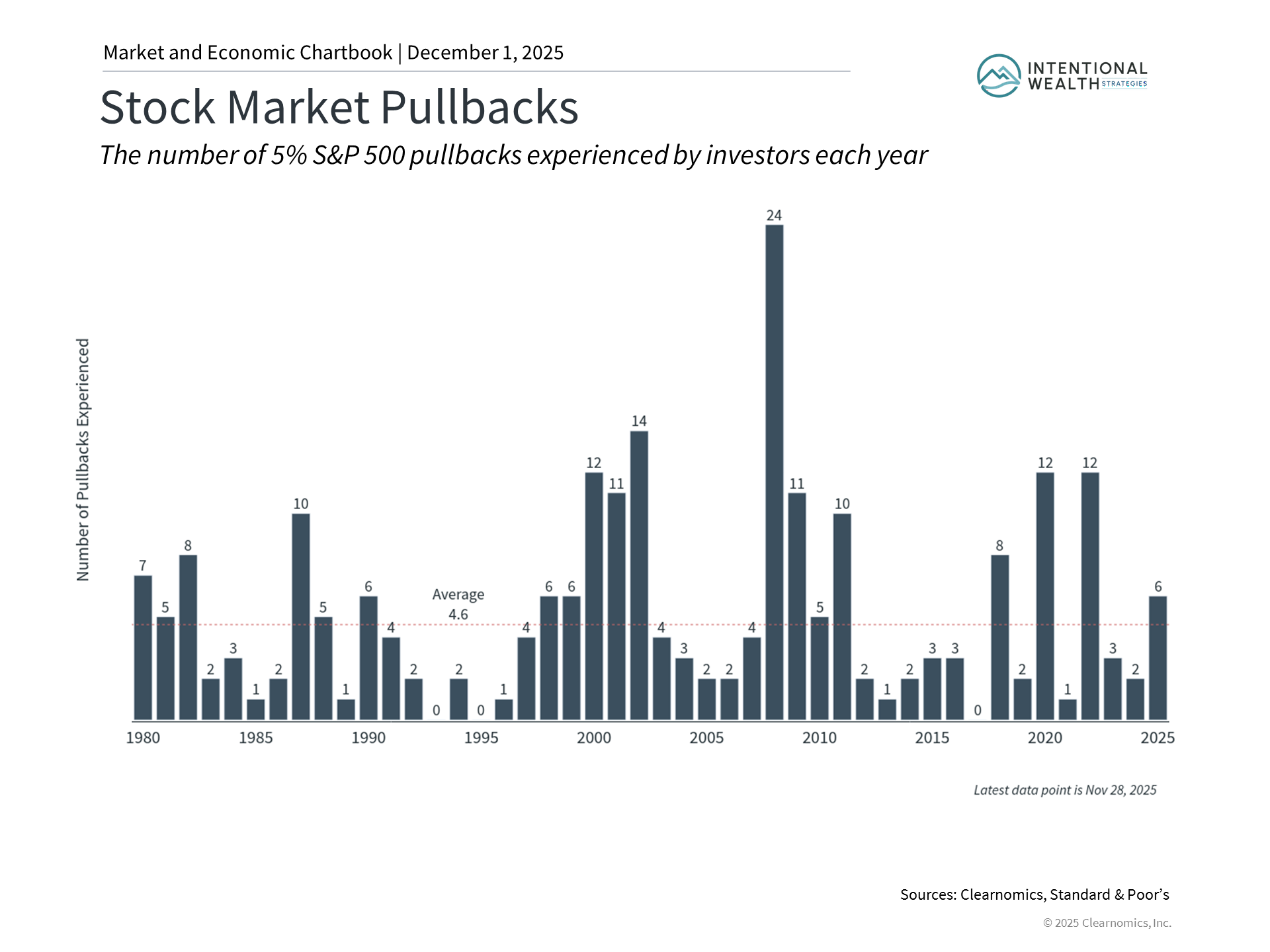 |
Investors briefly retreated from risk assets including technology stocks and cryptocurrencies, driven by questions surrounding AI investment sustainability and Federal Reserve policy expectations. The S&P 500 experienced six declines of 5% or more this year, matching historical norms, though many assets recovered by month's end.
AI-focused technology stocks faced their most challenging week since April amid concerns about spending levels and profitability. Despite this turbulence, underlying fundamentals remained solid, with companies like Nvidia reporting strong quarterly results. Several Magnificent 7 stocks rebounded following earnings announcements.
Bitcoin tumbled over 30% from early October peaks above $125,000, briefly erasing year-to-date gains. While cryptocurrency adoption has expanded, such episodes highlight the speculative nature of these assets. This underscores the ongoing importance of disciplined risk management and proper asset allocation.
Government shutdown concluded but uncertainty persists
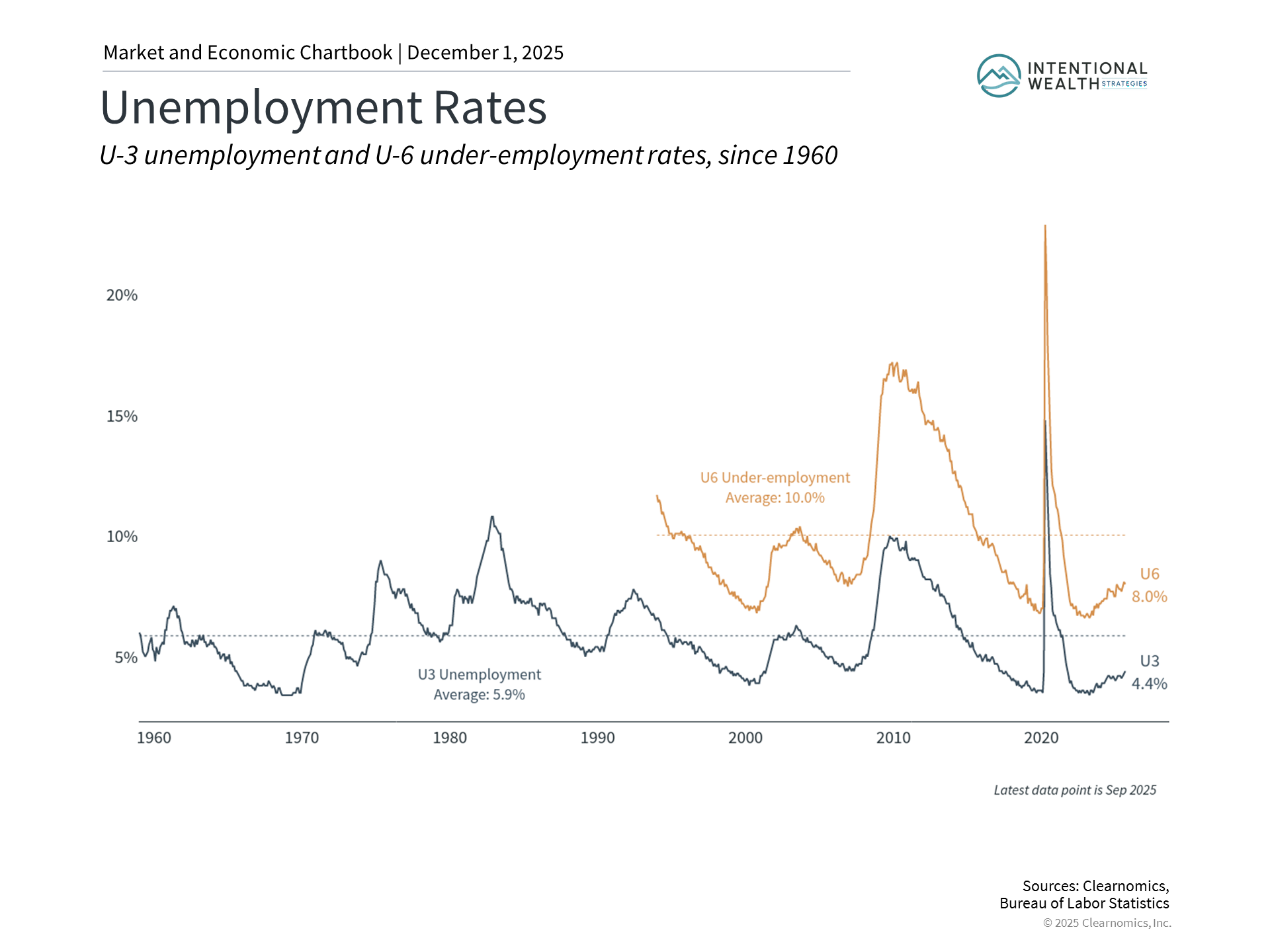 |
After 43 days, the historic government shutdown ended, though federal funding only extends through January 2026. Markets largely overlooked the shutdown despite data publication delays. The September jobs report showed stronger-than-expected gains, though revised August figures revealed 4,000 job losses. Unemployment edged to 4.4%, its highest since October 2021, while remaining historically low.
Federal Reserve rate cut expectations fluctuated
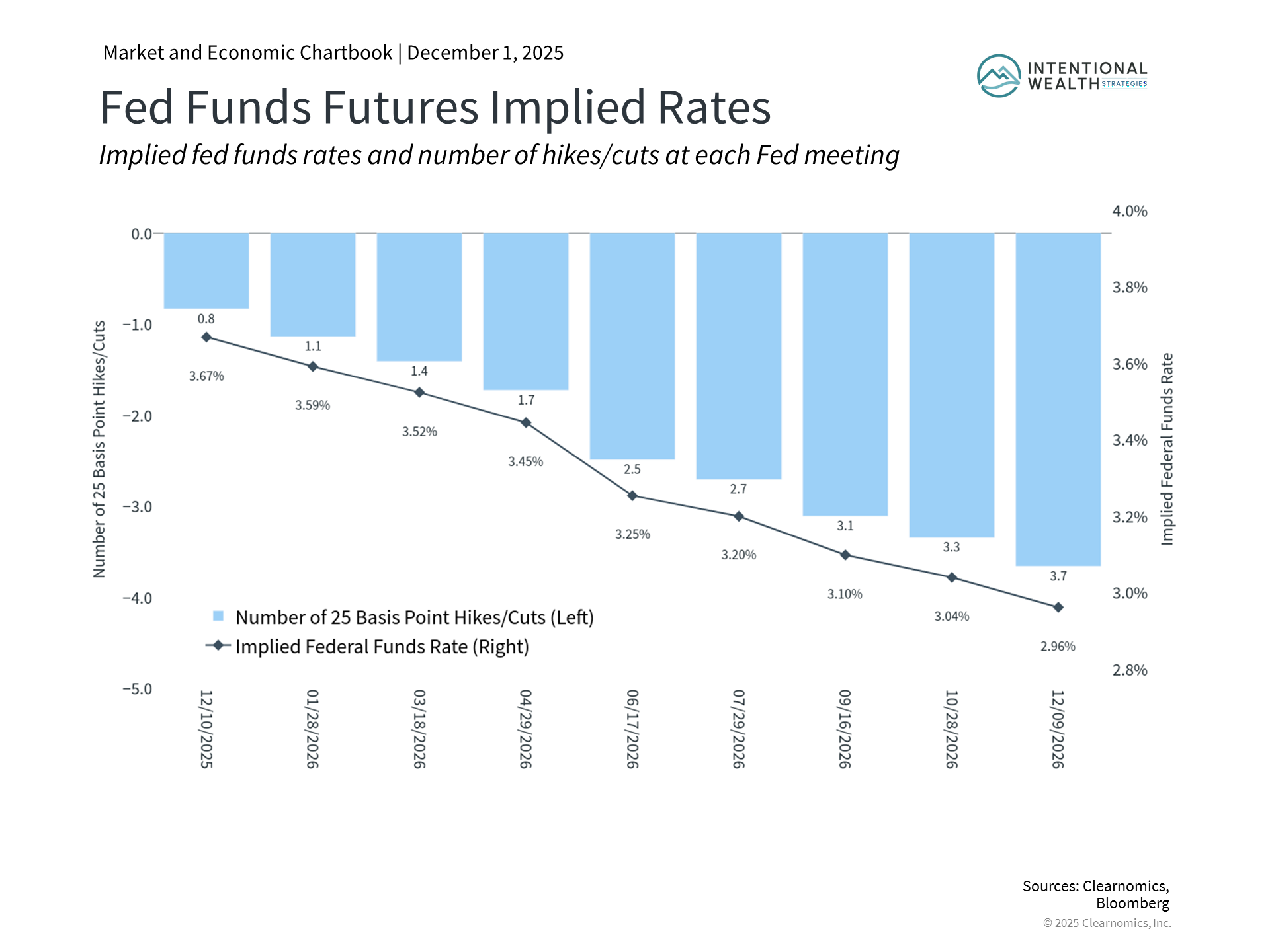 |
Data delays mean the Federal Reserve will face incomplete economic information at its December meeting. Market expectations for rate cuts shifted notably during November. Current projections suggest a December cut followed by additional reductions in early to mid-2026.
Consumer confidence deteriorated, with the University of Michigan's Index dropping from 53.6 to 50.3 in November, reflecting concerns about employment and inflation. However, weak sentiment hasn't yet translated into reduced consumer spending or corporate revenue declines.
The bottom line? November's volatility serves as a reminder that market fluctuations are normal. Long-term investors should maintain a diversified portfolio and stay focused on their goals rather than reacting to short-term headlines.