The conflict between the United States and Iran continues to shift, and markets are responding to each new development. When a ceasefire was announced, oil prices dropped, with Brent crude falling into the $90 range. But when peace talks broke down, prices climbed back above $100 per barrel. For long-term investors, the key question is how these events affect the broader economy, businesses, and everyday consumers. Geopolitical conflicts often impact financial markets mainly through energy prices. Higher energy costs can spread through the economy over time. Three areas worth watching are inflation (the rate at which prices rise), the job market, and corporate earnings (company profits).
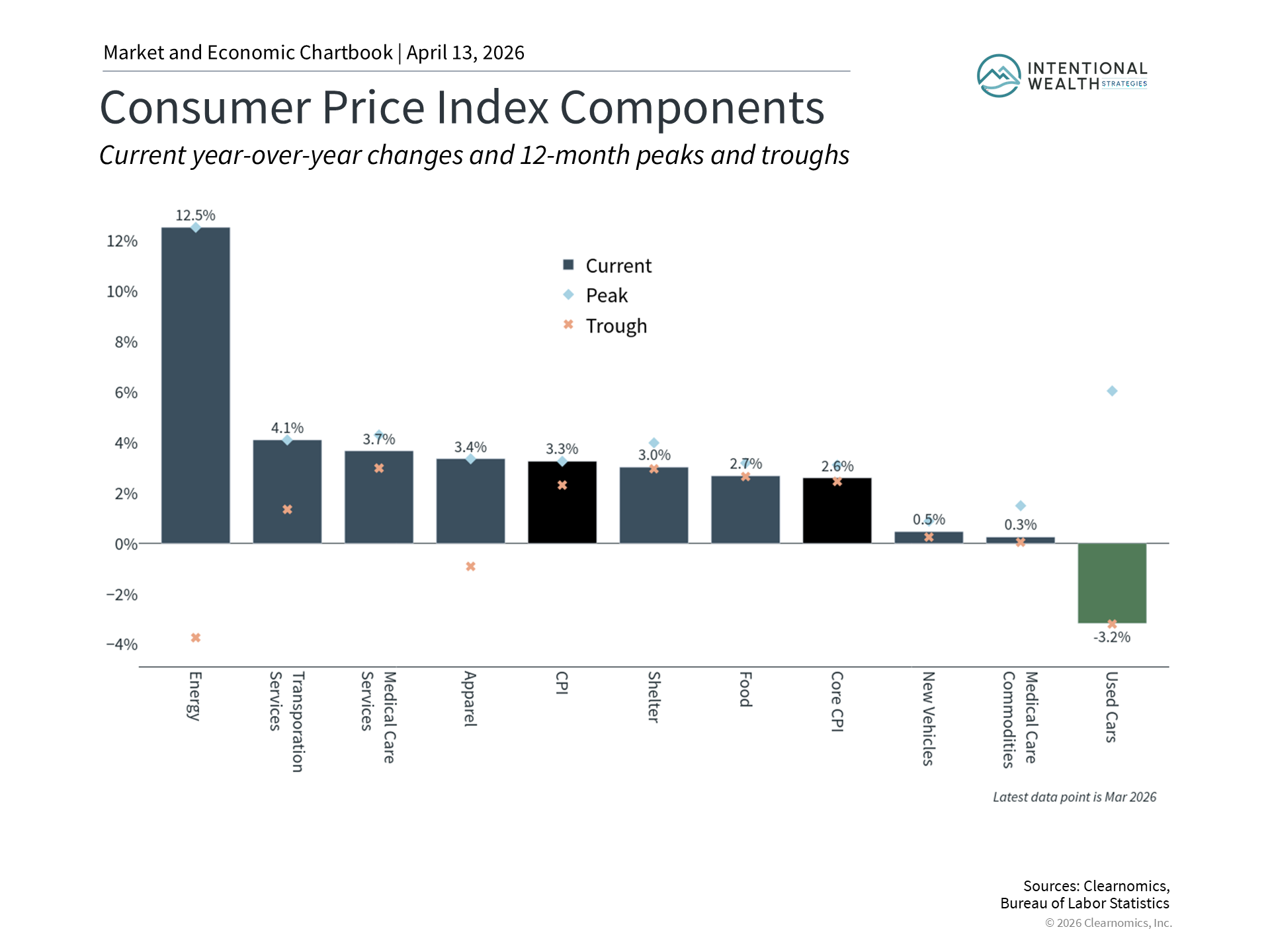
The most direct impact of the Iran conflict on consumers is through higher energy prices. The Consumer Price Index (CPI) — a measure of how much everyday goods and services cost — showed energy costs jumped 12.5% year-over-year in March, with gasoline up 18.9%. This pushed overall inflation to 3.3%, raising concerns about a return to the high-inflation environment of 2022. However, higher energy prices have not yet spread to most other areas of spending. Core CPI, which leaves out food and energy, rose only 2.6% year-over-year. A narrower measure that also removes housing costs — sometimes called "supercore" inflation — rose just 2.3%. These figures suggest energy pressures, while real, have not broadly pushed up prices across the economy yet. Economists often view these types of energy-driven price spikes as temporary. If the situation in the Middle East stabilizes, inflation could return to earlier levels. The drop in oil prices following the initial ceasefire announcement supports that possibility, though the outcome depends on how the conflict unfolds.
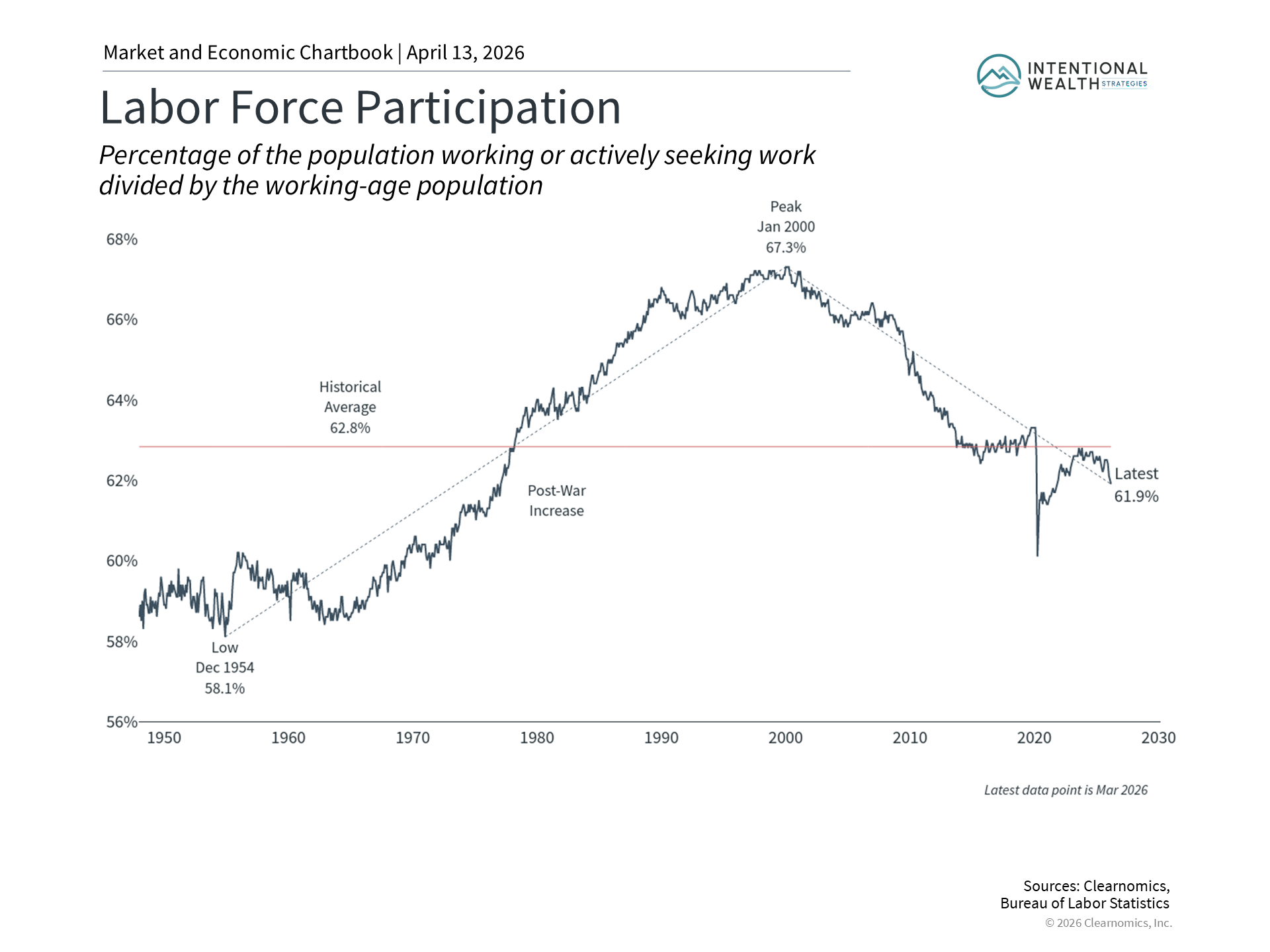
The labor market is another area investors should watch. In March, 178,000 new jobs were added, beating expectations of 65,000. However, the prior month was revised to show a loss of 133,000 jobs, a reminder that monthly job figures can be unreliable. The broader trend shows job creation has slowed significantly, averaging only about 21,000 new jobs per month since the start of 2025, compared to 122,000 per month in 2024. Despite slower hiring, the unemployment rate edged down slightly to 4.3% in March. But this reflects fewer people actively looking for work, not stronger hiring. The labor force participation rate — the share of working-age Americans who are employed or job-seeking — fell to 61.9%, its lowest level since the pandemic. This is partly due to long-term demographic trends, such as an aging population, with over 11,000 baby boomers reaching retirement age every day. Consumers are facing higher costs while the job market softens. Still, those who want to work are generally finding jobs, and wage growth of 3.4% year-over-year is still outpacing inflation for many workers, providing some support for consumer spending.
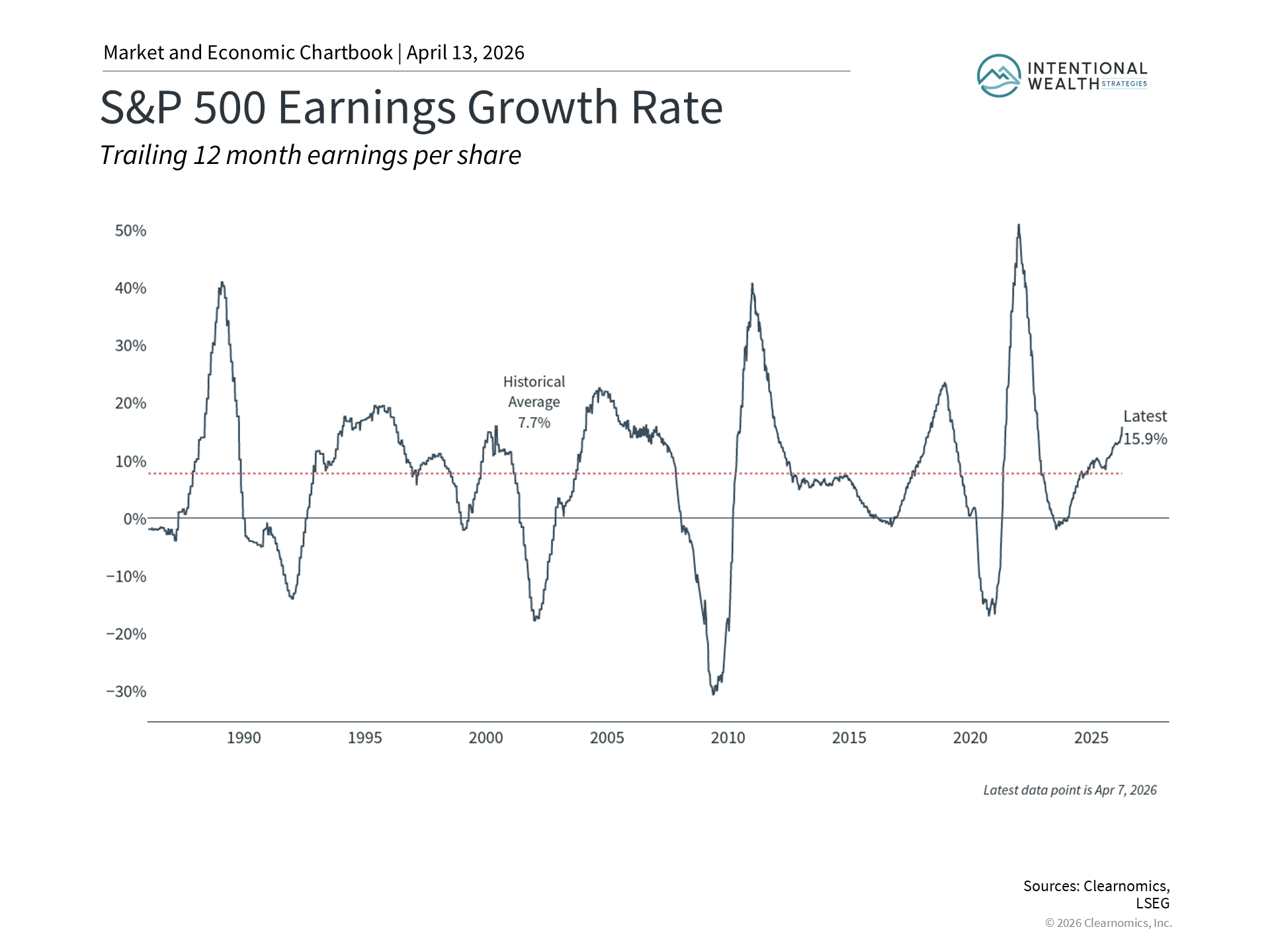
Despite the challenges above, company profits have held up well. S&P 500 earnings-per-share (a measure of company profitability) have grown approximately 16% over the past twelve months, with analysts expecting an additional 18% growth over the coming year. These are well above the long-term average growth rate of 7.7% and have helped support stock market valuations. Earnings estimates can change as economic conditions evolve, and factors like tariff policies, higher energy costs, and a slower job market could weigh on profits ahead. However, periods of market uncertainty can also create opportunities for patient, long-term investors. When markets fall due to geopolitical events, company earnings often don’t decline as sharply as stock prices do, which can make valuations more attractive. The bottom line? Higher energy prices are affecting the economy, just as consumers face other challenges. However, strong earnings growth and more attractive valuations have created opportunities for investors as well. Maintaining a balanced portfolio and staying focused on long-term financial goals remains the best approach to navigating this environment. | |||

Inflation, Earnings, and the Evolving Conflict with Iran: What Investors Should Know